Get-e driver app
Redesigning the Get-e driver app
Get-e connects airlines, insurance companies, and travel platforms with reliable ground transport. For crews and pilots, every minute counts: a late ride can break rest schedules or delay a flight. Redesigning the driver app was about making every ride trackable, reliable, and effortless to manage for drivers and passengers alike.
The first driver app, launched in 2019, struggled to gain traction. Drivers had to keep it open on screen, adoption was low, and key features were missing, such as flight tracking, vehicle identification, reliable updates. In 2024 we released a redesigned version with a cleaner experience, verified driver and vehicle profiles, and effortless ride tracking. This time, drivers wanted to use it.
My role
As the sole product and UI designer, I was responsible for shaping the new features and redesigning the experience. My focus was on simplifying the driver flow while ensuring tracking and reliability for passengers.
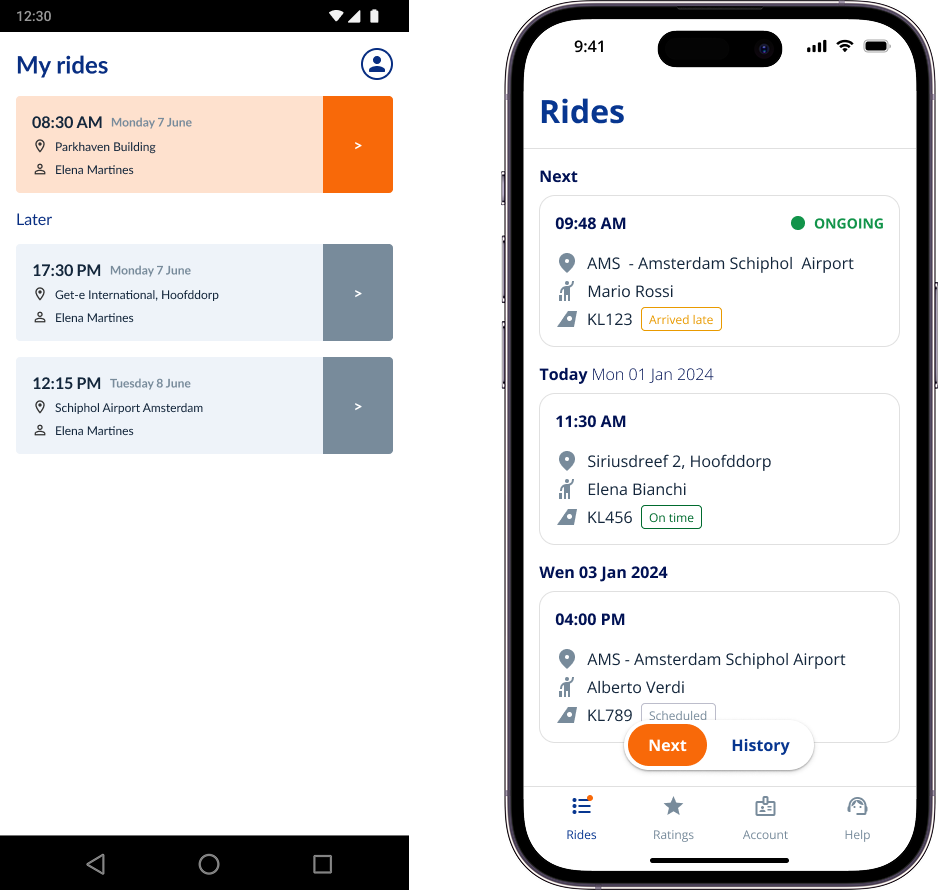
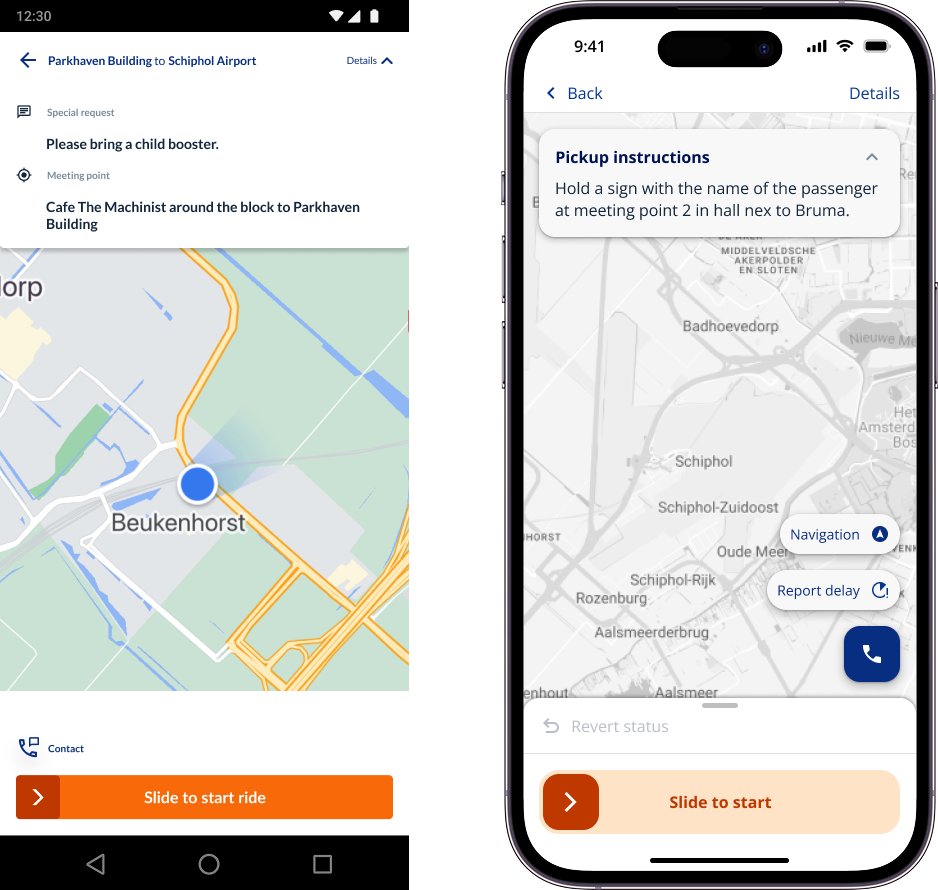
Evolution of the Get-e Driver App, from the 2019 original to the current version
The process
Research
To understand the pain points, I interviewed drivers, gathered feedback from our ops team and customers, and studied mobility apps like Uber and Bolt, plus logistics tools. Three big issues stood out:
- Manual status updates - Drivers had to progress every step themselves, distracting from what matters most: safe, on-time driving.
- Poor tracking - Passengers and clients often saw no tracking or wrong statuses, leaving them unsure if their ride would appear.
- No added value - Drivers still had to find passengers in crowded airports without any way to identify themselves.
These insights showed us that the app was asking too much from drivers while giving too little in return, and that the tracking experience on the customer side was unreliable.
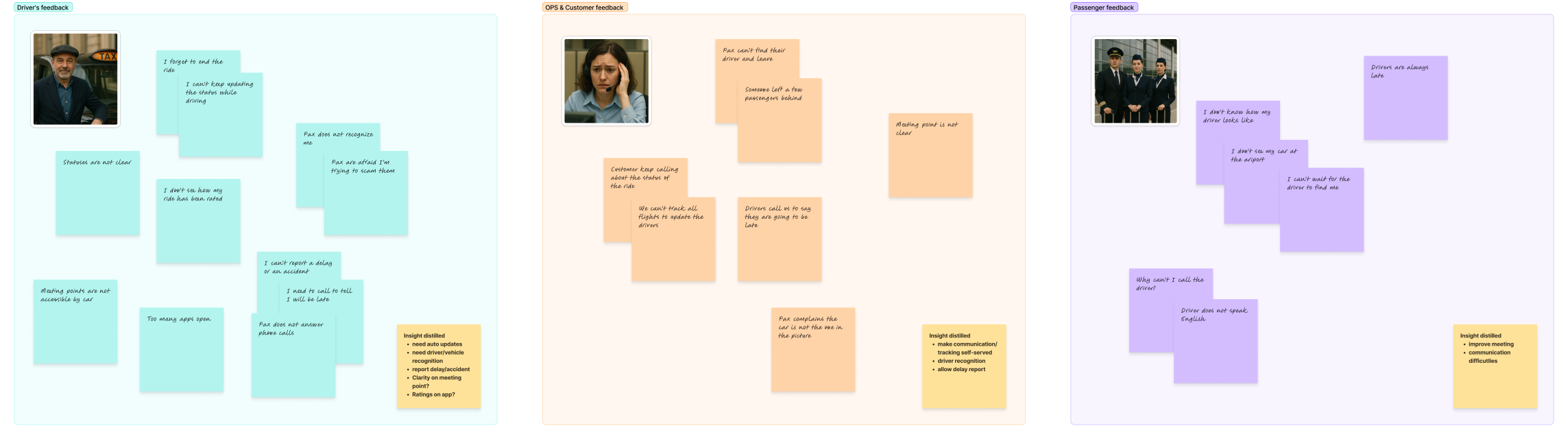
Outcome of the user interview in association with the persona I created
Define
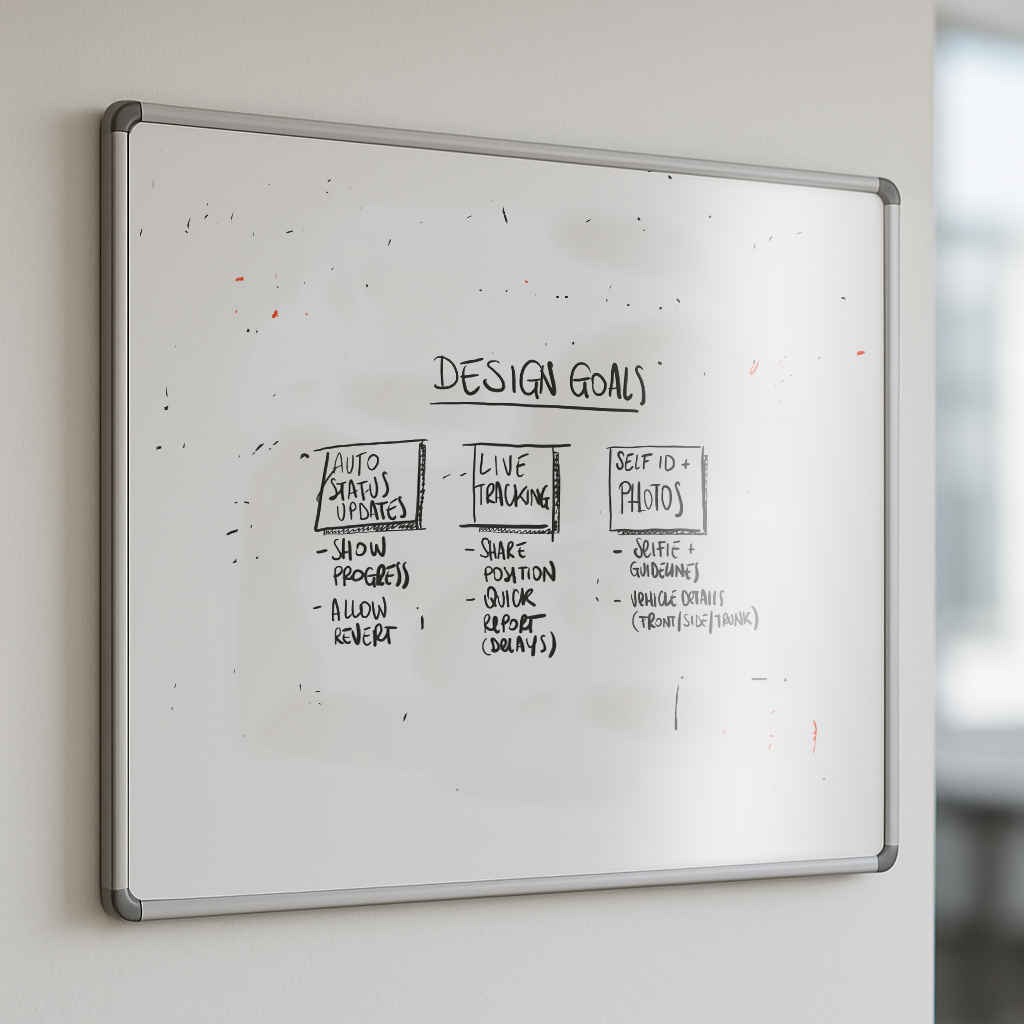
Together with the product managers, we prioritised what had the biggest impact on safety and reliability. Two must-fix goals: automate status progression and make tracking accurate. At the same time, we needed drivers to actually adopt the app. Since dispatchers could not provide vehicle details, we made drivers responsible for self-identifying and uploading photos of their car.
Design
The vehicle identification flow was one of the trickiest features. Drivers confirm the vehicle for each ride by selecting model and colour and uploading up to three photos. Before the ride starts, the app validates this information and displays it to the passenger.
The design challenge was balancing detail with speed: capture enough data to help passengers, but keep the flow short and clear for drivers. We tested variations, built shortcuts, and allowed a way out if details could not be provided immediately.
The design challenge was balancing detail with speed: capture enough data to help passengers, but keep the flow short and clear for drivers. We tested variations, built shortcuts, and allowed a way out if details could not be provided immediately.
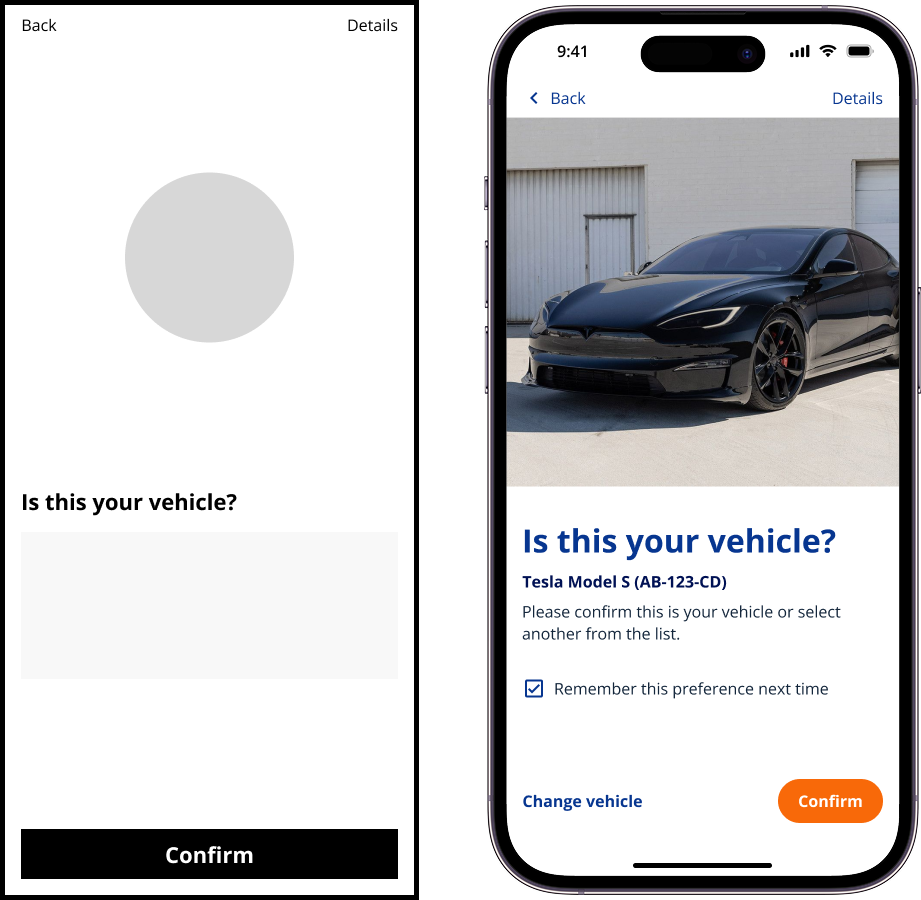
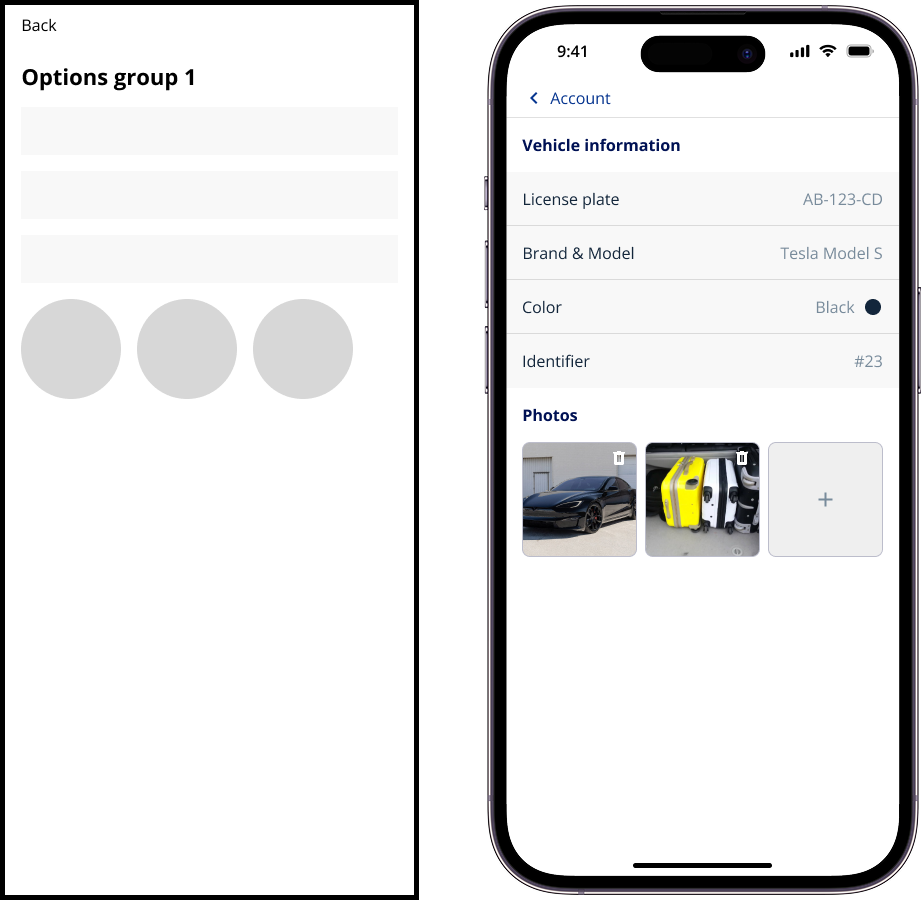
Wireframe to high fidelity mockup
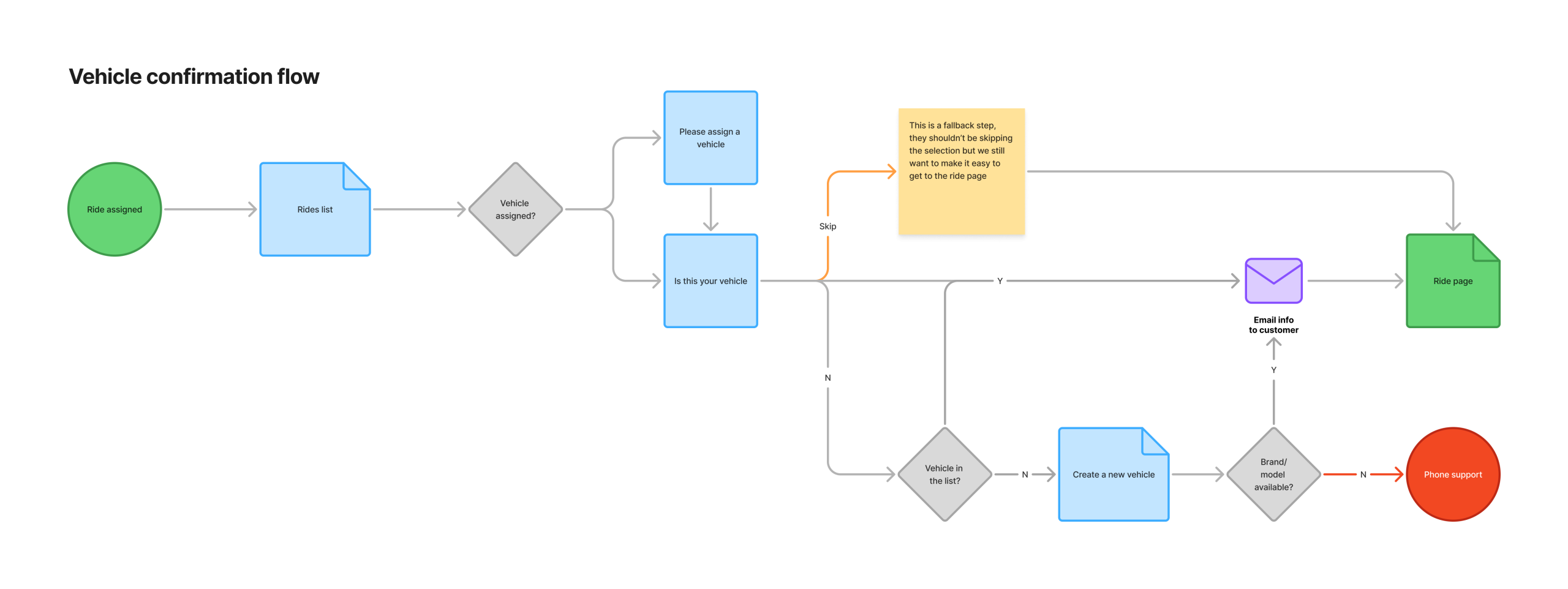
Flow showing how drivers confirm vehicle details before each ride, with shortcuts for speed and error handling.
The challenges of keeping the passengers informed
One of the hardest problems in this project was how to keep passengers reliably informed about their ride: on one side, we introduced automated ride updates based on speed and location. But determining exactly when to update a ride is not simple. Conditions change constantly, and a threshold that works in one situation may be wrong in another.
At a busy airport, knowing the car and driver in advance makes all the difference.
Insight from flight attendant
On the other side, we needed to give drivers a way to communicate directly with passengers without relying on phone calls. In many cases, language barriers or international numbers made calling ineffective. A lighter, contextual way of signalling delays or sharing status was essential.This tension between automation and communication became a central design challenge, and solving it required multiple iterations.
Marking delays
One of the challenges we had with drivers, was the impossibility in certain case to communicate unforseen delays with passengers: even when the driver was more than willing, sometimes language barriers and or costly international calls made difficult for them to contact the passengers directly.
To overcome this issue, we added a quick barrier-free option: Drivers can report a delay in seconds by choosing from presets or marking a ride as not completable. Passengers get clarity, drivers stay focused.
To overcome this issue, we added a quick barrier-free option: Drivers can report a delay in seconds by choosing from presets or marking a ride as not completable. Passengers get clarity, drivers stay focused.
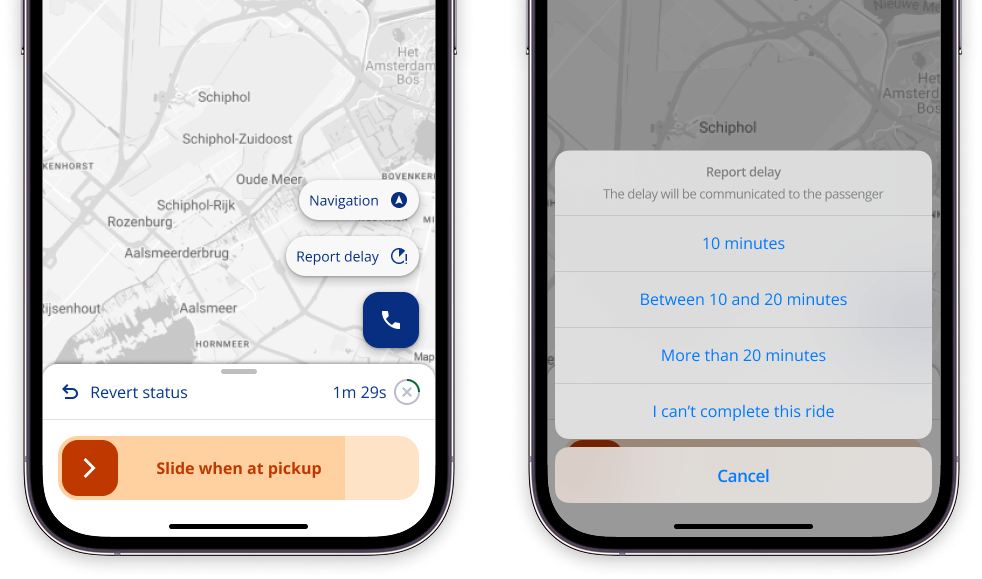
Automated status updates
Another big challenge was deciding when the app should automatically progress a ride. Speed and location data were not always enough. For example, a driver slowing down near an airport could mean they were arriving, stuck in traffic, or taking a wrong turn.
To make this more reliable, we designed an area-based logic. Each airport or hotel location was mapped with an inner zone and an outer zone, defined according to the size of the airport or the position of the hotel. Entering or exiting these zones would trigger status updates more accurately, while still leaving drivers the option to adjust if something was wrong.
This approach reduced errors, gave passengers more consistent tracking, and took pressure off drivers to manually update their status.
To make this more reliable, we designed an area-based logic. Each airport or hotel location was mapped with an inner zone and an outer zone, defined according to the size of the airport or the position of the hotel. Entering or exiting these zones would trigger status updates more accurately, while still leaving drivers the option to adjust if something was wrong.
This approach reduced errors, gave passengers more consistent tracking, and took pressure off drivers to manually update their status.
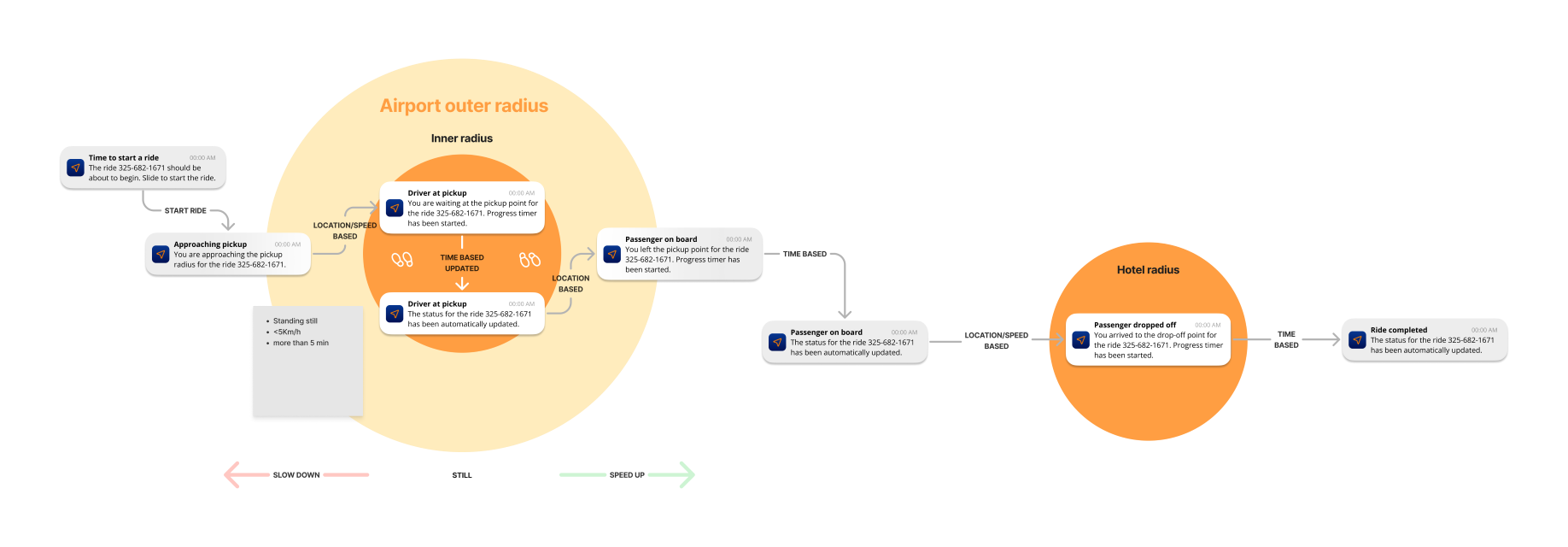
Speed, radius and location were all part of a very complicated equation
Delivery and outcomes
The redesigned driver app replaced a clunky tool with a clear, reliable experience. Drivers now receive contextual guidance at every step, can confirm their vehicle and upload photos, and have quick options to notify passengers of delays without the need for a call. Ride statuses progress automatically based on location and speed, with the driver able to step in when needed. For passengers, this means accurate live tracking and clear identification of their driver and vehicle.
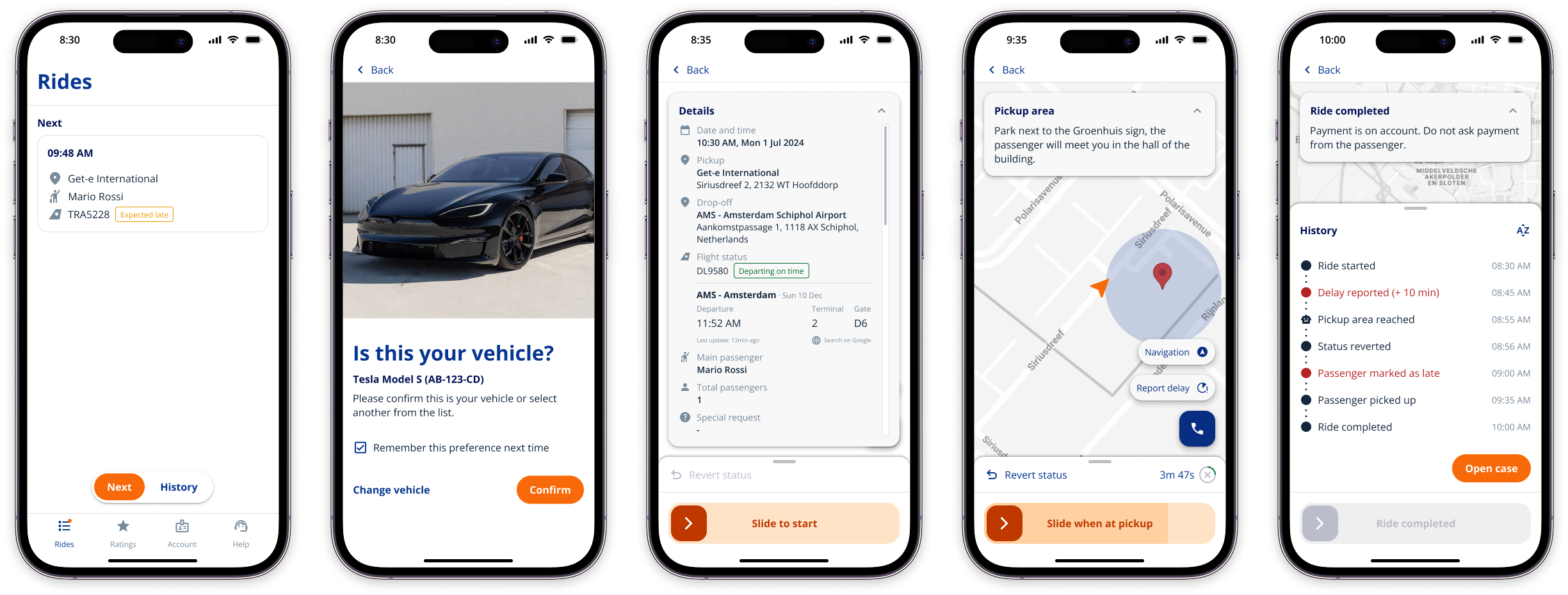
A few screens from the 2024 version of the Driver App
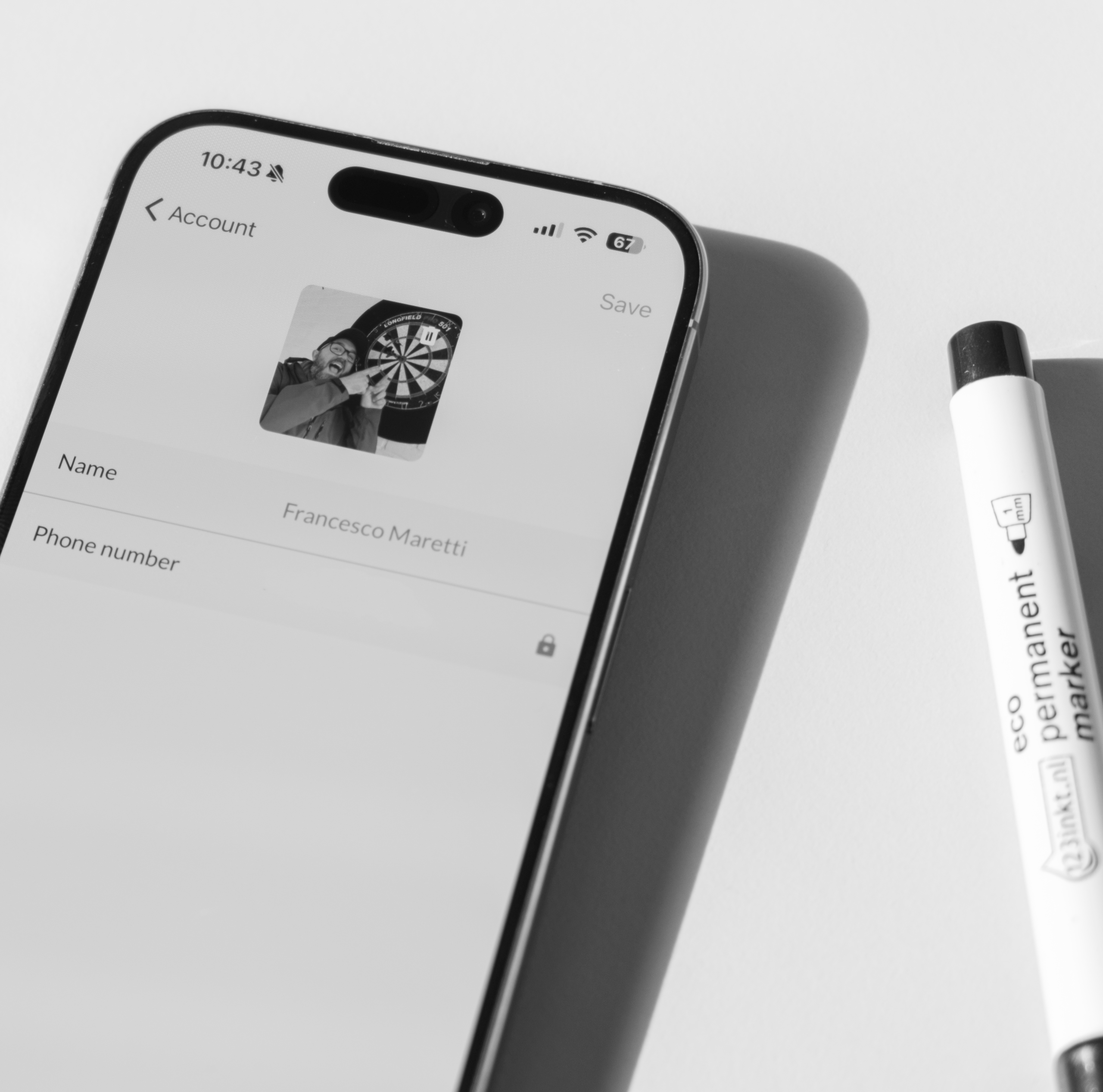
Outcomes and improvements
+143%
Yearly growth in average daily unique users performing an average of 4,4k daily sessions compared to the 1,8k of last year.
42%
Rides with verified vehicles details with around 90% of the rides being tracked.
55
NPS score from 30 of the previous survey, above the average for B2B/SaaS and considered "Excellent".
LEssons from the ride
Key Takeaways
Automation is never perfect
Drivers needed control to adjust updates, not just automation for its own sake.
Give users a reason to care
When improvements add value, people will put in effort and passengers notice.
Communication needs simplicity
Quick delay reporting solved language and international calling issues without extra friction.