An AI-automated invoice upload system
Automating hotel invoices for airline companies
Get-e provides ground transportation for airline crews, and later expanded into hotel stays to offer airlines a continuous, end-to-end service. While the service was complete, the way hotels sent invoices was anything but: files came in by fax, email, PDF or Excel, often with multiple bookings and extra charges packed into one document.
Our operations team struggled to keep track, and customers lacked transparency. To solve this, I designed a system where hotels could upload or email invoices directly into the hotel booking portal. Each invoice was scanned with AI, matched to the right bookings, and either sent to the customer for approval if confidence was high, or flagged for manual review when it was not. This gave structure to a messy process and brought efficiency to everyone involved.
My role
I was the product designer responsible for the end-to-end process: shaping the flow, defining how invoices moved through the system, and designing the interface. I collaborated with developers to integrate AI seamlessly and worked closely with the operations team to make sure the tool addressed their daily workload.
The process
Research
Most of the research was on our own operations team and hotel partners. For the business, the main problem was volume: a constant flow of invoices, all in different formats, had to be processed by hand. Hotels had no real complaints about sending files: they could email a PDF, attach an Excel sheet or even fax a copy, but once submitted, they had little visibility on what happened next.
We can’t give invoices constant attention, they pile up faster than we can process them.
Insight from Operations team
On the customer side, the lack of transparency was even more critical. Disputes often arose around extra charges like laundry or late check-out, and it was hard to track where an invoice stood once it was contested. These patterns made it clear that the system needed to reduce manual work while giving both hotels and customers more trust.
Three were the main pain points we focused on trying to solve:
Three were the main pain points we focused on trying to solve:
- Manual workload - Operations team had to process a constant flow of invoices by hand.
- No visibility for hotels - Once sent, they could not see the status of their invoices.
- Low transparency for customers - Extra charges often led to disputes with no clear tracking.
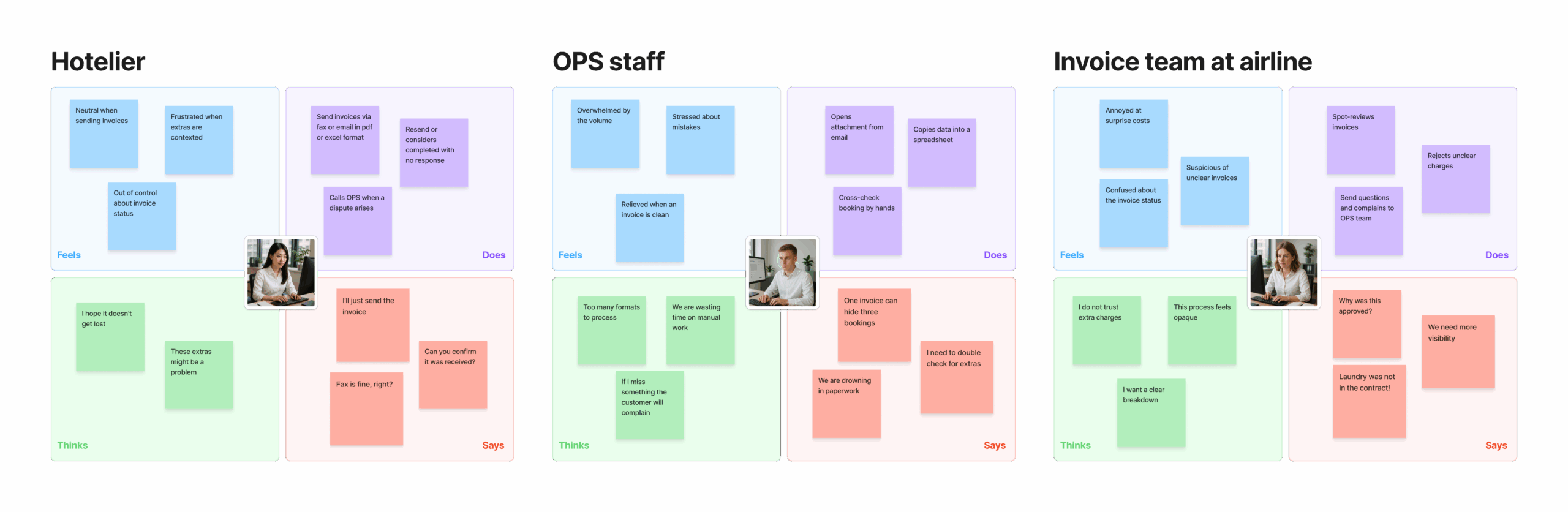
The empathy maps revealed uncertainty and distrust from all the side of the equation
Define
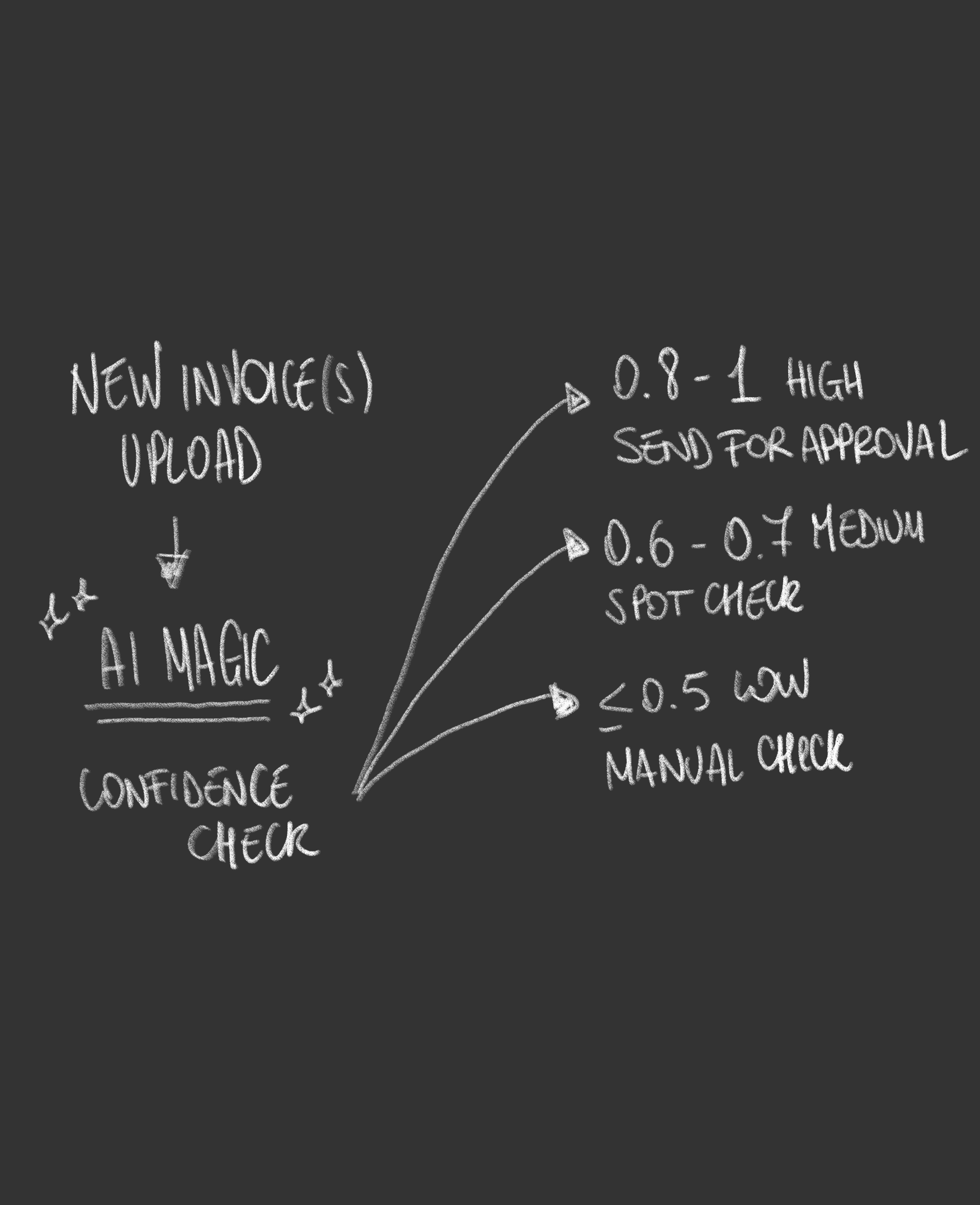
The main goal was to reduce manual effort while creating trust for hotels and customers. A key constraint was the company’s first use of AI: we needed to understand what “good enough” confidence looked like in practice. When the AI scanned an invoice, it returned a confidence score between 0 and 1, essentially an estimate of how sure it was that the data matched correctly. For the MVP, anything above a safe threshold was auto-approved, while lower scores were flagged for manual review. Uploading via the portal was prioritised to keep the flow simple, while email uploads were postponed to a later phase.
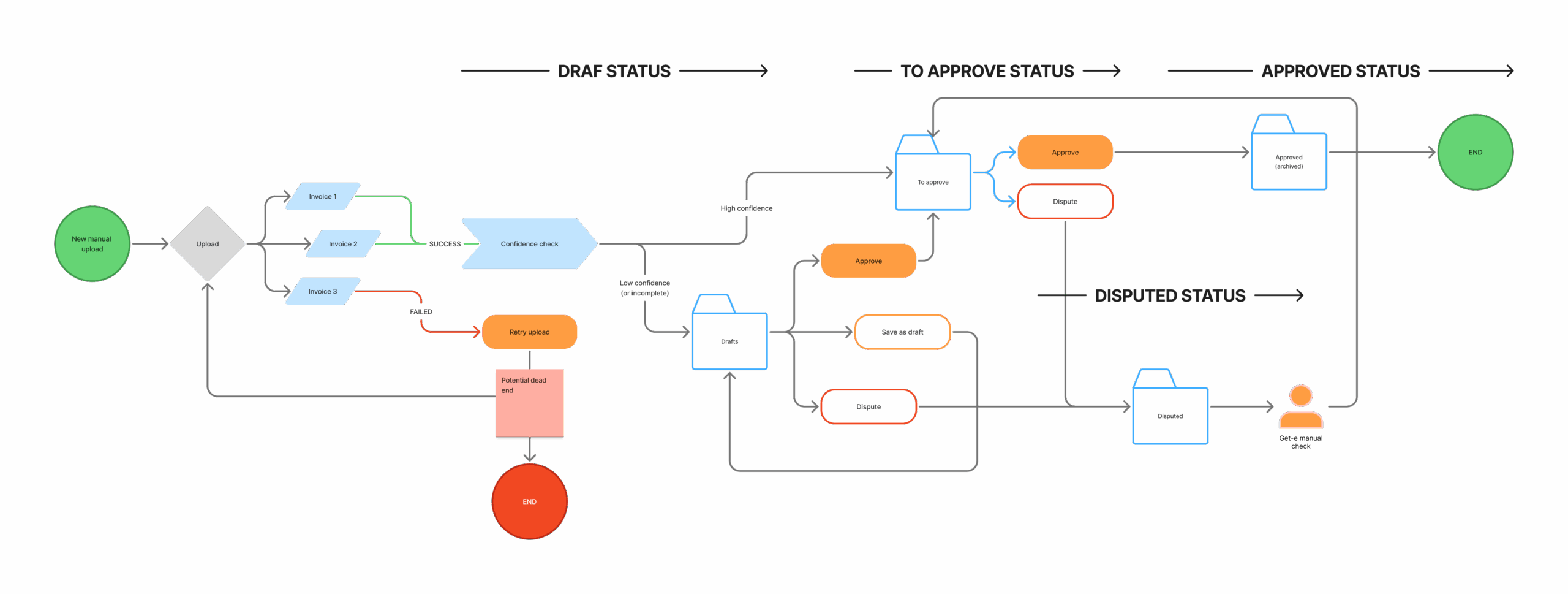
Flow of the different statuses after the upload
Design
The visual direction followed the design language I had already established for the company. The focus was on making the interface useful and actionable: users had to see right away what was happening with each invoice. Uploads triggered clear snackbar notifications for success or failure, and hotels were notified through a counter in the sidebar whenever an invoice was rejected. To handle AI confidence, I chose to show the confidence level directly, so users could understand whether the system was confident in its match or if a manual check was needed. The result was a design that reduced uncertainty and kept all parties informed without adding extra steps.
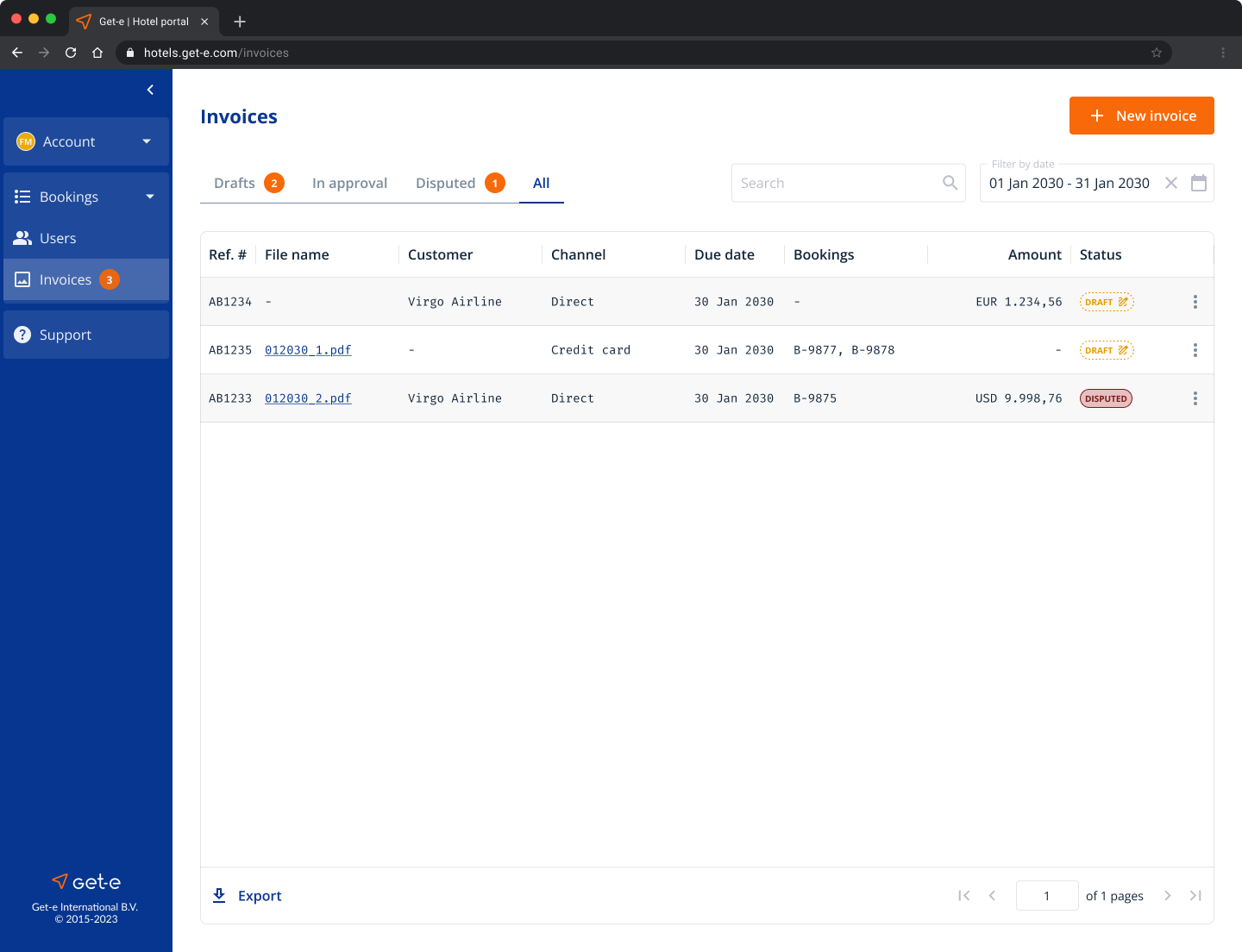
Keeping the invoice list readable
Counters on each tab show exactly how many items need action, while a clean table layout makes it easy to scan customers, amounts and statuses at a glance.
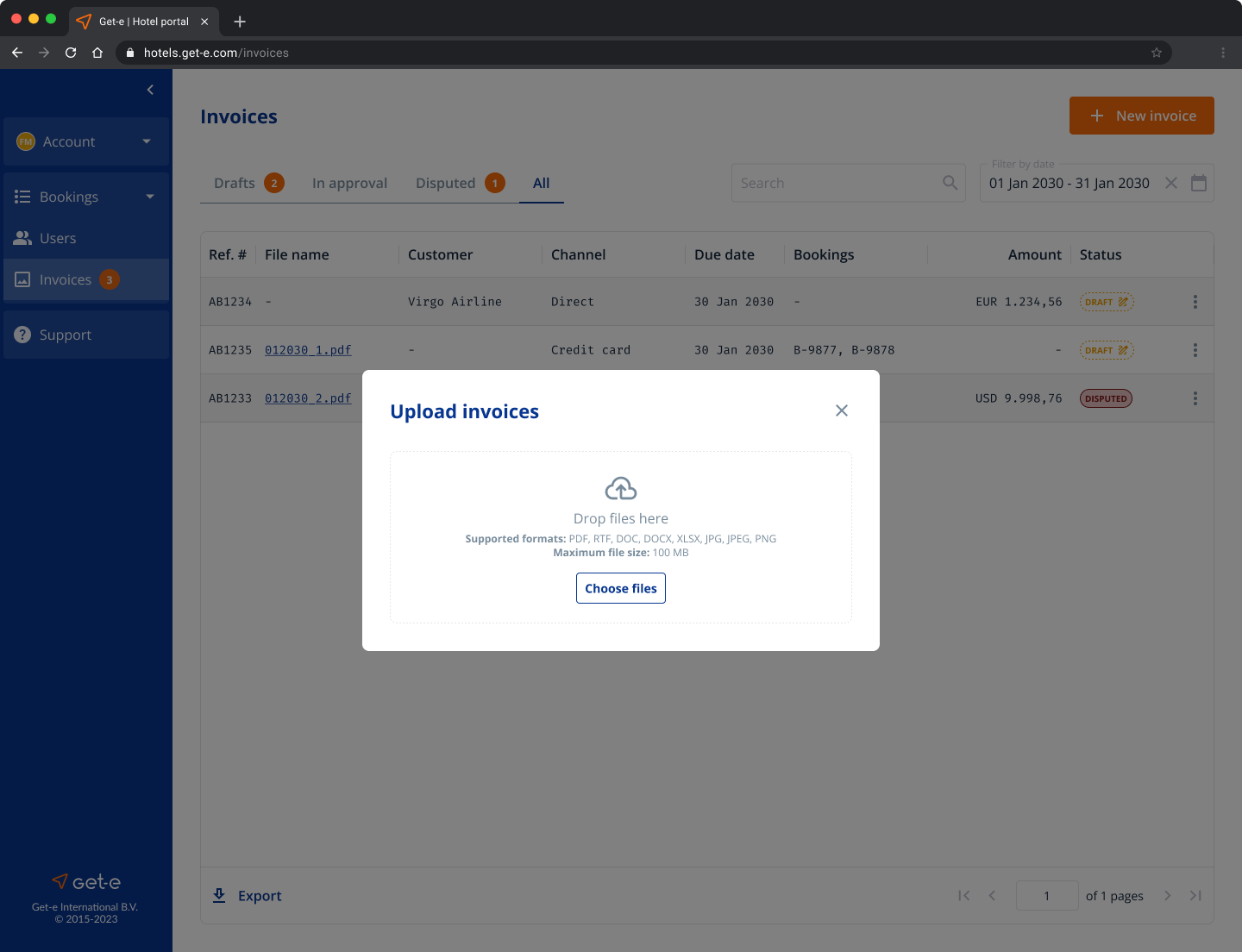
Drop to upload
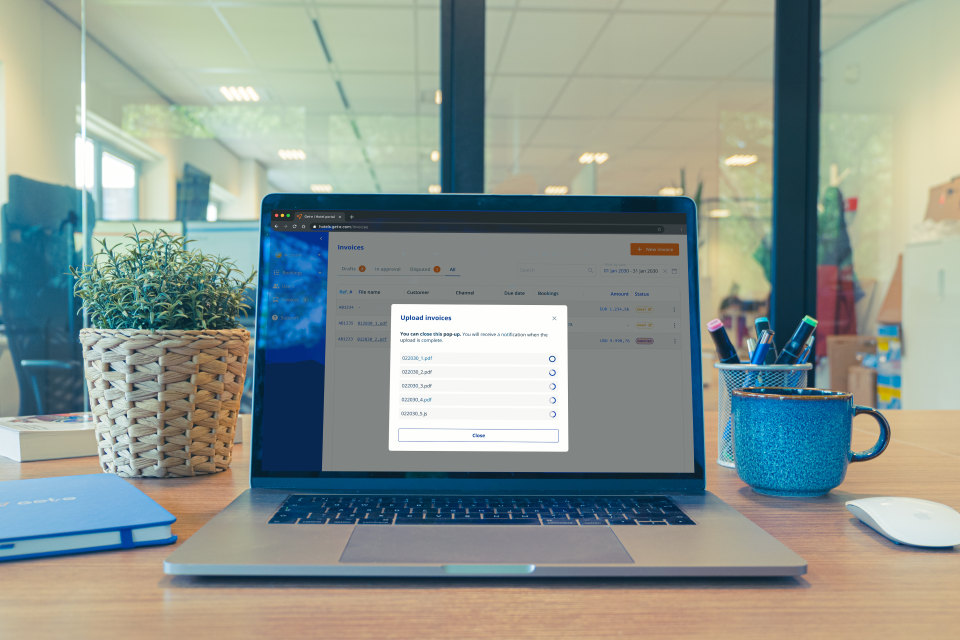
Hotels could drag and drop files of any common format, or simply click to choose them. Supporting the formats they already used removed friction and made adoption easier.
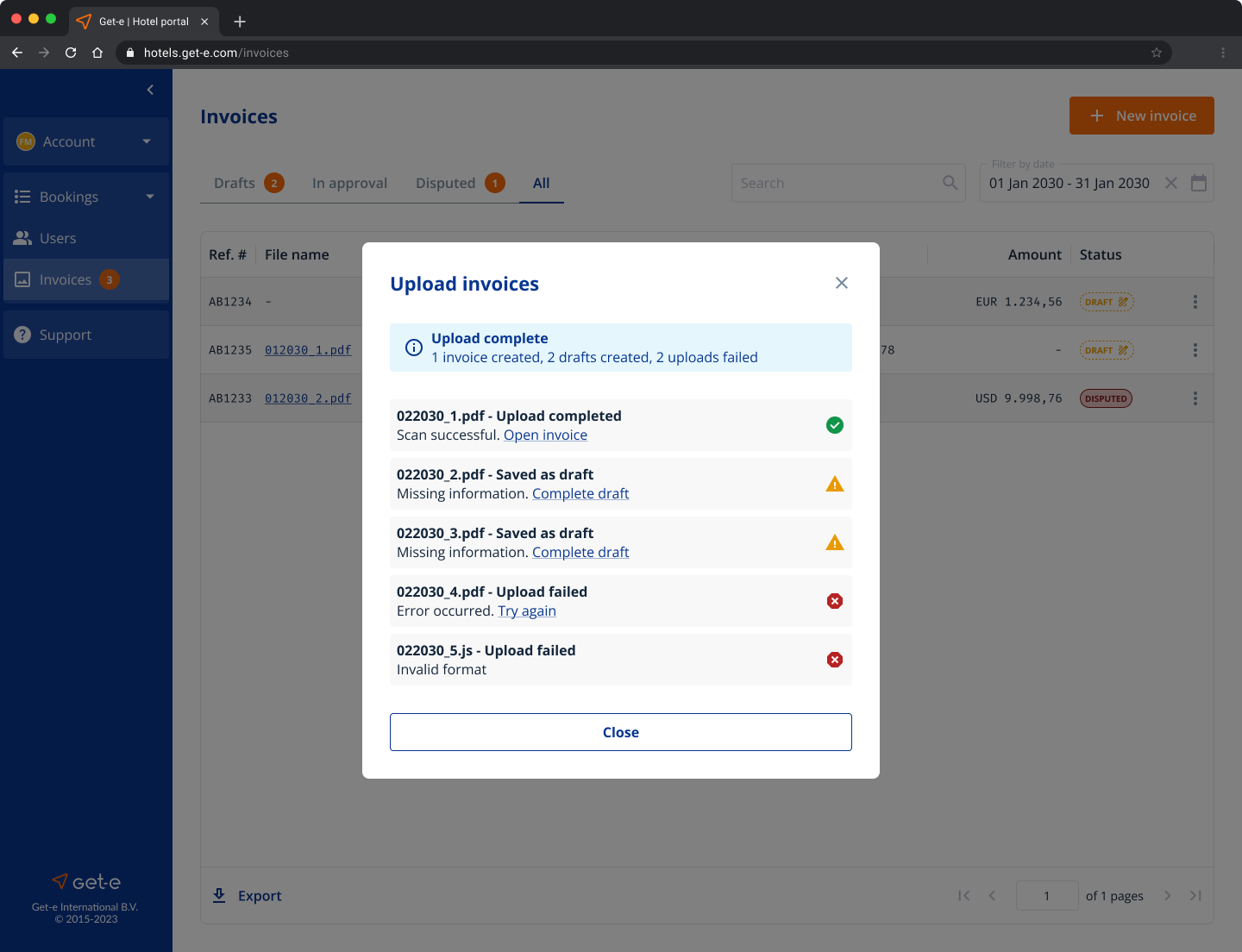
Clear feedback for every upload
Invoices could be completed, saved as drafts, or flagged as failed, all in a single view. This made it easy for users to understand what worked, what needed fixing, and what to try again, without losing track of progress
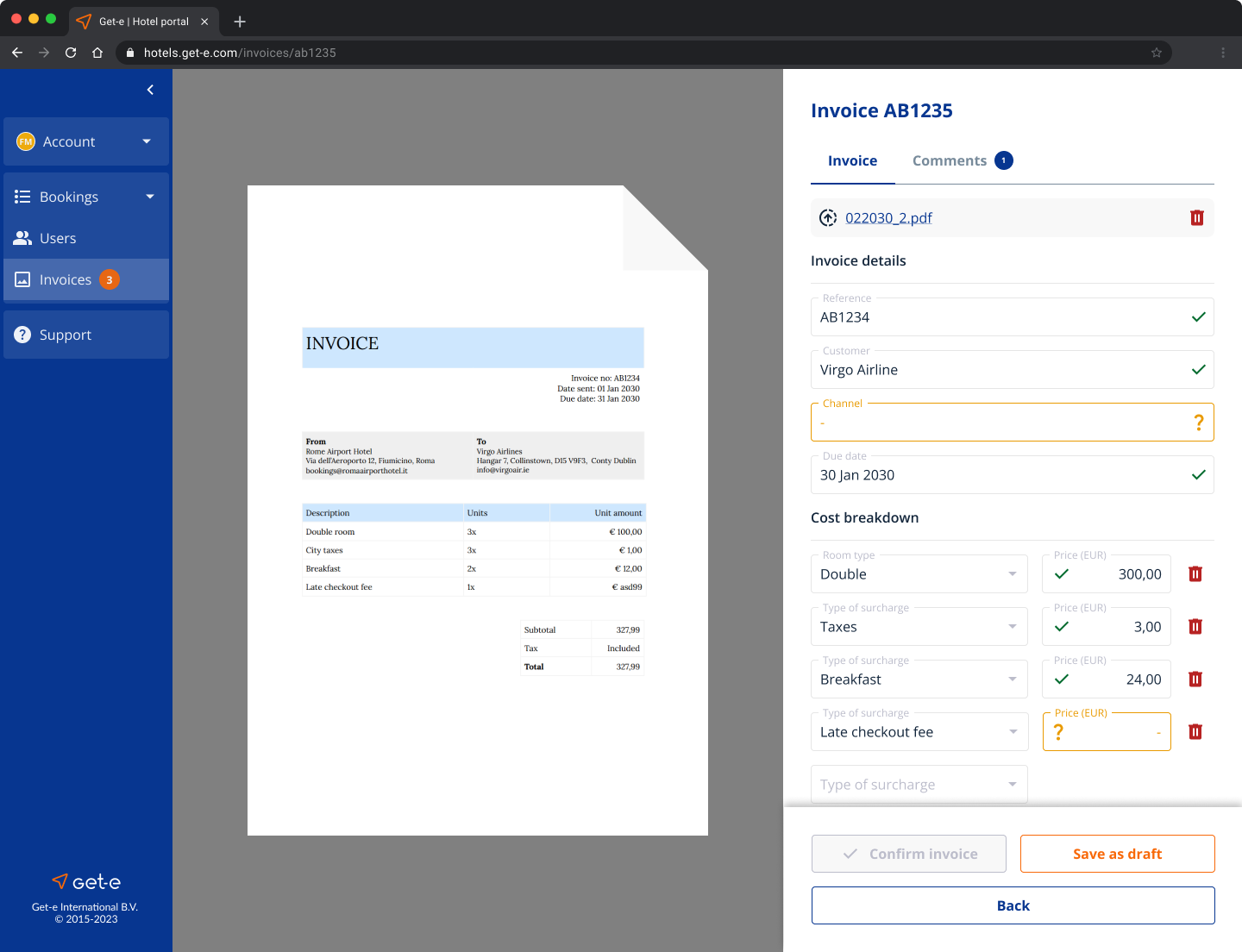
AI support to invoice
The system extracted data automatically, highlighted anomalies, and gave users a chance to confirm or correct values. Error states were visible straight away, reducing costly mistakes.
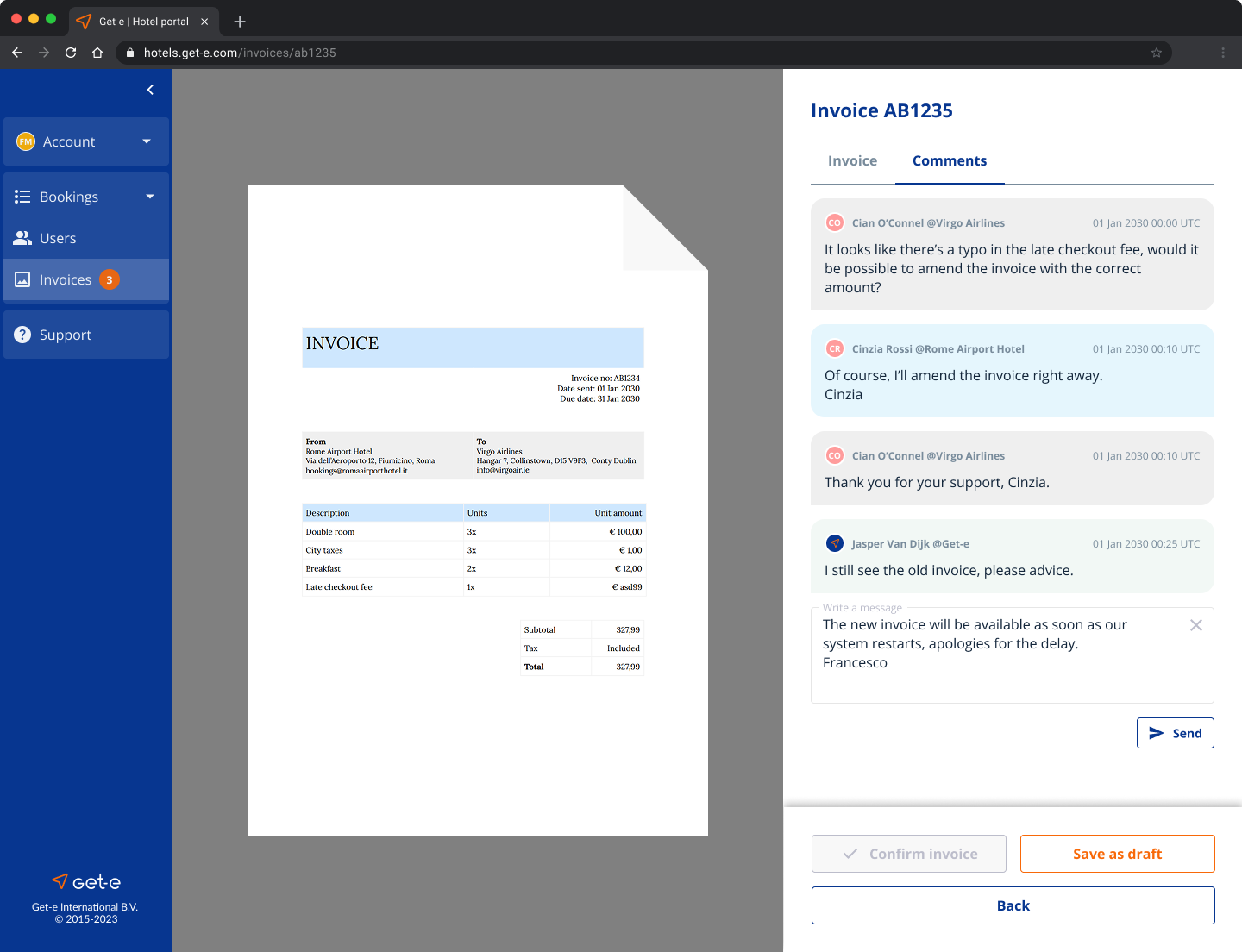
Easy dispute resolution
Hotels and customers could comment on the same invoice to clarify extra charges or correct mistakes. This reduced the need for support intervention and sped up resolution, while keeping a clear record of the conversation.
Delivery and outcome
The MVP rolled out as part of the hotel portal and began replacing the old manual process. Hotels could upload invoices, track their status, and resolve disputes directly with customers. Internally, operations gained a structured way to review and approve invoices with AI support instead of handling everything by hand.
Although I left the company after delivering the MVP, the tool established a foundation for scaling invoice automation and improved trust between hotels, operations, and customers.
Although I left the company after delivering the MVP, the tool established a foundation for scaling invoice automation and improved trust between hotels, operations, and customers.
LEssons from the ride
Key Takeaways
AI needs transparency
AI can reduce manual work, but users need clear feedback and visible status to learn to trust it.
Errors belong to the flow
Good design acknowledges mistakes and gives people simple ways to fix them.
Collaboration reduces frictions
Letting hotels and customers resolve disputes directly lowered pressure on support and sped up the process.